Cuisinart Ice Cream Maker Instructions: A Comprehensive Guide
Embark on a delightful journey of homemade frozen desserts! This guide provides detailed instructions, troubleshooting tips, and maintenance advice for your Cuisinart ice cream maker, ensuring consistently delicious results.
Understanding Your Cuisinart Ice Cream Maker
Your Cuisinart ice cream maker is a fantastic appliance designed to bring the joy of homemade ice cream, sorbet, and frozen yogurt right to your kitchen. However, achieving optimal results requires understanding its core functionality. The machine utilizes a double-walled freezer bowl containing a special coolant liquid. This coolant is crucial; it’s what allows the bowl to get cold enough to freeze the ice cream base without needing ice or rock salt.
A common issue arises when this coolant fails to freeze adequately, leading to a liquid, rather than frozen, mixture; This often happens when the coolant’s freezing point drops below your freezer’s temperature. Recognizing this potential problem – indicated by a sloshing sound when the bowl is warm – is key to successful operation. While advanced users might consider replacing the coolant, understanding this core mechanism is the first step towards enjoying perfect homemade treats.
Components and Their Functions
The Cuisinart ice cream maker consists of several key components working in harmony. The freezer bowl, the heart of the system, contains the coolant responsible for freezing the mixture. The outer bowl provides insulation, while the paddle, driven by the motor base, continuously churns the ingredients, preventing large ice crystals from forming.
The lid features an opening for adding mix-ins during the churning process. Understanding each part’s role is vital. The coolant’s effectiveness dictates freezing success; a malfunctioning coolant renders the machine ineffective. The paddle’s consistent motion ensures a smooth texture. The motor base powers this process, and the lid allows for customization. Proper assembly – securing each component correctly – is essential for safe and efficient operation, ultimately delivering creamy, delicious results.
Initial Setup and Preparation
Before your first batch, thoroughly wash the freezer bowl, paddle, lid, and any other detachable parts with warm, soapy water. Ensure all components are completely dry before assembly. Familiarize yourself with the machine’s parts – the freezer bowl, motor base, paddle, and lid – and how they connect.
Crucially, the freezer bowl requires significant pre-freezing – typically 16-24 hours – to reach the necessary temperature. Confirm your freezer is cold enough to adequately freeze the coolant within the bowl. A partially frozen bowl will result in a liquid, rather than frozen, mixture. Prepare your ice cream base recipe according to instructions, noting that pre-chilling the base can improve texture. Proper preparation is key to a successful and enjoyable ice cream-making experience.
Getting Started: Pre-Freezing the Bowl
Achieving optimal freezing is paramount! The bowl must be thoroughly frozen for 16-24 hours to ensure successful ice cream creation and a delightful texture;
Importance of Complete Freezing
Complete and thorough freezing of the Cuisinart ice cream maker bowl is absolutely critical for successful operation. The bowl contains a coolant that needs to be fully frozen to absorb heat from the ice cream base during churning. If the coolant isn’t solid, the mixture won’t freeze, remaining in a liquid state despite prolonged churning.
This is due to the principles of latent heat of fusion – the energy required to change a substance from a solid to a liquid. A properly frozen bowl effectively draws heat away, initiating the freezing process. Insufficient freezing results in a soft, unappealing consistency, or no freezing at all. Ensure the bowl is placed in the coldest part of your freezer, undisturbed, for the recommended 16-24 hours, depending on your freezer’s temperature and the bowl’s size.
Consistent results depend on this initial step; don’t rush it!
Troubleshooting: Bowl Not Freezing – Coolant Issues
If your Cuisinart ice cream maker bowl isn’t freezing despite ample time in the freezer, a coolant issue is highly probable. The coolant within the double-walled bowl may have lost its freezing capacity, potentially dropping below your freezer’s temperature. This means it gets cold, but doesn’t solidify, hindering heat absorption from the ice cream base.
A simple test: when warm, gently shake the bowl. If you hear sloshing, the coolant is likely liquid. A frozen bowl should be solid with no movement. While Cuisinart doesn’t officially support coolant replacement, experienced users have successfully drained and refilled the bowl with a 70% water / 30% propylene glycol mixture, aiming for a -14°C (7°F) freezing point.
Caution: This is an advanced procedure and voids the warranty. Proceed at your own risk, ensuring proper sealing after refilling.

Checking for Coolant Sloshing

Determining if the coolant within your Cuisinart ice cream maker bowl is frozen is crucial for successful operation. The easiest diagnostic method is a simple slosh test. Before attempting to make ice cream, remove the bowl from the freezer and, while it’s still warm enough to handle comfortably, gently shake it.
Listen carefully for any liquid movement. A properly frozen bowl will feel solid and exhibit no sloshing sound. If you clearly hear liquid swishing around inside, it indicates the coolant hasn’t fully frozen, and therefore won’t effectively chill the ice cream base. This suggests a degradation of the coolant’s freezing properties.
Important Note: Perform this test before each use, especially if you’ve experienced issues with incomplete freezing in previous batches. A sloshing sound is a strong indicator of a problem requiring attention.
Potential Coolant Replacement (Advanced Users)
For experienced users comfortable with DIY repairs, replacing the coolant may restore functionality to a non-freezing bowl. This process involves carefully drilling small holes in the plastic casing to drain the existing coolant. A recommended replacement mixture is 70% water and 30% propylene glycol, achieving a freezing point around -14°C (7°F).
Caution: This procedure voids any warranty and requires precision. Ensure complete coolant removal before introducing the new mixture. After refilling, meticulously seal the drilled holes with a waterproof sealant to prevent leaks and maintain the bowl’s integrity. Improper sealing can render the bowl unusable.
Making Your First Batch of Ice Cream
Begin with a delicious recipe and thoroughly chill the ice cream base for optimal texture! Assembling the machine is simple, preparing you for creamy, homemade goodness.
Recipe Selection and Preparation
Choosing the right recipe is the first step towards ice cream perfection! Cuisinart ice cream makers are versatile, handling everything from classic vanilla to adventurous flavors. Start with a well-reviewed recipe specifically designed for ice cream makers – this ensures proper ingredient ratios and freezing times.
Careful preparation is crucial. Accurately measure all ingredients; slight variations can impact the final texture. Many recipes call for a custard base, requiring gentle heating and constant stirring to avoid scorching. Ensure the base is completely smooth before chilling. Pre-chilling the base, as some enthusiasts suggest, significantly improves the final texture by minimizing ice crystal formation.
Consider the sugar content; sugar not only sweetens but also lowers the freezing point. Recipes often specify a balance to achieve the desired consistency. Don’t be afraid to experiment with mix-ins like chocolate chips, fruit purees, or nuts, but add them during the final few minutes of churning for even distribution. A well-prepared base is the foundation for a truly exceptional homemade ice cream experience!
Chilling the Ice Cream Base
Properly chilling your ice cream base is paramount for optimal results! Allowing sufficient time for the mixture to cool significantly impacts the texture and freezing speed. Ideally, chill the base for at least two to four hours, or even overnight, in the refrigerator. This ensures the mixture is thoroughly cold before it enters the pre-frozen bowl.
A cold base freezes more quickly, minimizing ice crystal formation and resulting in a smoother, creamier consistency. Some users even advocate for pre-chilling the entire process, including the machine itself, to accelerate freezing. The colder the starting temperature, the less time the machine needs to work, and the better the outcome.
Remember, a warm base will struggle to freeze effectively, potentially overworking the motor and yielding a grainy texture. Don’t skip this crucial step – patience here translates directly to a superior homemade ice cream experience. A well-chilled base is a key ingredient for success!
Assembling the Ice Cream Maker
Carefully assemble your Cuisinart ice cream maker following these steps for a seamless experience. First, ensure the thoroughly chilled freezer bowl is completely dry. Place the bowl securely onto the machine base, aligning it correctly – it should fit snugly and without wobbling. Next, insert the dasher assembly into the bowl.
The dasher, with its paddle, is responsible for churning and incorporating air into the mixture. Ensure it’s properly seated and can rotate freely. Finally, attach the clear lid to the machine, locking it into place. This lid prevents splattering during the churning process and allows you to monitor the ice cream’s consistency.
Double-check all components are securely fastened before plugging in the machine. A properly assembled machine is crucial for efficient churning and a delightful frozen treat. Incorrect assembly can lead to malfunctions or uneven freezing, so take your time and verify each step.

The Churning Process
Initiate the magic! Plug in your assembled Cuisinart, and let it churn for the recommended time, typically 20-30 minutes, until the desired consistency is achieved.
Optimal Churning Time
Determining the ideal churning duration is crucial for perfect ice cream. Generally, a Cuisinart ice cream maker requires between 20 to 30 minutes of churning, but this timeframe can fluctuate based on several factors. The initial temperature of your ice cream base significantly impacts the process; a thoroughly chilled base will freeze faster.
Observe the mixture’s consistency closely. Initially, it will be liquid, gradually thickening as it churns. Continue until the mixture resembles soft-serve ice cream – thick, but still pliable. Some users prefer to churn until the base becomes too solid for the paddle to move freely, indicating a firmer texture.
Remember, over-churning can lead to a grainy texture, while under-churning results in a soupy consistency. Pre-chilling the machine for about 10 minutes before adding the base can also expedite the freezing process and improve the final product’s texture, minimizing ice crystal formation.
Consistency Check: Soft Serve vs. Firm Ice Cream
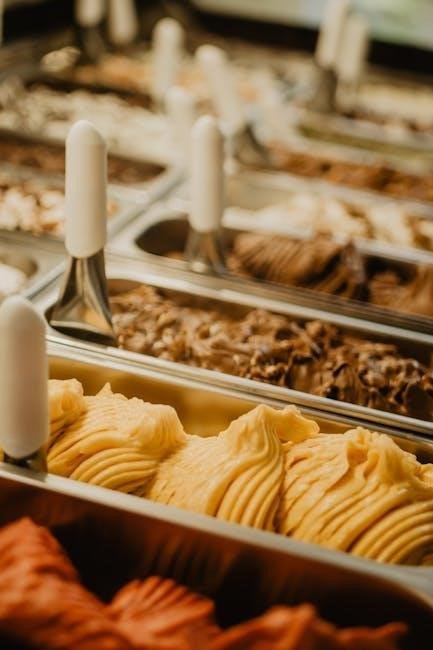
Understanding the difference between soft-serve and firm ice cream consistency is key to knowing when churning is complete. Immediately after churning, your ice cream will likely resemble soft-serve – smooth, creamy, and easily scoopable, but lacking the rigidity of traditionally frozen ice cream. This is perfectly acceptable for immediate enjoyment!
However, if you prefer a firmer texture, transferring the freshly churned ice cream to a freezer-safe container is necessary. Allow approximately one to two hours for a noticeable firming effect, or up to six hours for a completely solid consistency.
The final firmness depends on your preference. Serving directly from the machine offers a delightful soft-serve experience, while further freezing provides a more traditional, scoopable ice cream. Monitoring the mixture’s resistance to the paddle during churning also helps; when it struggles to move, it’s nearing the desired consistency.
Pre-Chilling the Machine (Optional)
While not strictly required, pre-chilling the Cuisinart ice cream maker can significantly enhance the freezing process and improve the final texture of your homemade ice cream. Running the machine for approximately ten minutes without the ice cream base inside lowers the internal temperature of the dasher and bowl, creating a more efficient cooling environment.
This proactive step helps the ice cream base freeze more rapidly upon introduction, minimizing ice crystal formation and resulting in a smoother, creamier consistency. It’s particularly beneficial when working with recipes that are prone to slower freezing or contain ingredients that inhibit ice crystal growth.
Consider pre-chilling as a technique to optimize your results, especially if you’re aiming for a particularly refined texture. It’s a simple addition to the process that can make a noticeable difference in the quality of your frozen dessert!
Post-Churning and Storage
Enjoy immediately for soft serve, or transfer to a freezer-safe container! Further freezing for a couple of hours yields firmer results, perfect for scooping and savoring.
Serving Immediately vs. Further Freezing
The beauty of a Cuisinart ice cream maker lies in the option to enjoy your creation immediately! Upon finishing the churning process, the ice cream will typically have a soft-serve consistency. This is perfectly delightful for those who prefer a lighter, smoother texture and are ready to indulge right away. However, be prepared to work quickly, as it will begin to melt relatively fast.
If you desire a firmer, more traditional ice cream texture, transferring the freshly churned mixture to a freezer-safe container is recommended. Allowing it to harden in the freezer for approximately one to two hours will noticeably improve the consistency. For a truly solid scoopable texture, extending the freezing time to around six hours is ideal. Remember to press plastic wrap directly onto the surface of the ice cream before sealing the container to prevent ice crystal formation and maintain optimal quality.
Achieving Desired Firmness
Controlling the final firmness of your homemade ice cream is easily achievable with a Cuisinart machine. The churning process typically stops when the base becomes too solid for the paddle to rotate freely, resulting in a soft-serve texture. This is a fantastic option for immediate enjoyment, offering a light and airy consistency. However, for a more traditional, scoopable ice cream, a period of hardening in the freezer is necessary.
The duration of this hardening phase dictates the ultimate firmness. A shorter freeze – around one to two hours – will yield a slightly firmer, yet still relatively soft, texture. Extending this to six hours will produce a solid, classic ice cream consistency. Remember, covering the surface directly with plastic wrap minimizes ice crystal formation, ensuring a smoother, more enjoyable final product, regardless of your preferred firmness level.
Storage Recommendations
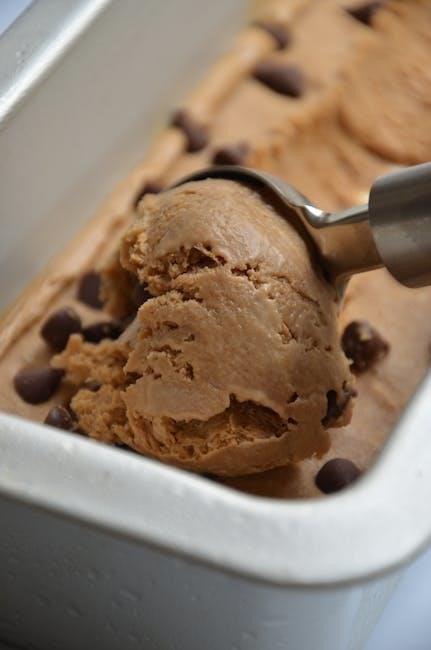
Proper storage is crucial for maintaining the quality of your homemade Cuisinart ice cream. After churning and achieving your desired firmness, transfer the ice cream to an airtight container. This prevents freezer burn and minimizes the absorption of unwanted odors. Ideally, use a shallow container; this helps maintain a consistent texture throughout.
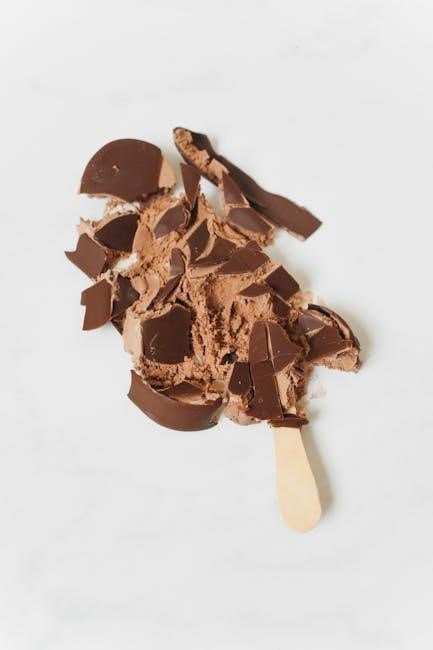
For short-term storage (up to two weeks), the ice cream can be stored directly in the freezer. However, for longer preservation – extending beyond two weeks – consider placing a layer of plastic wrap directly on the surface of the ice cream before sealing the container. This further safeguards against ice crystal formation. Remember to label the container with the date for optimal freshness and enjoyment of your delicious creation!
Maintenance and Cleaning
Preserve your Cuisinart ice cream maker’s longevity! Regular disassembly, thorough cleaning, and proper long-term storage are essential for continued, optimal performance.
Disassembling the Ice Cream Maker
Before cleaning, carefully disassemble your Cuisinart ice cream maker. Begin by unplugging the unit and ensuring the freezer bowl is removed. Detach the paddle and the dasher assembly from the motor base; typically, a simple lift-and-twist motion suffices.
Next, separate the dasher’s components – the paddle itself and any surrounding blades or attachments. Pay attention to how these pieces fit together, as correct reassembly is crucial. The motor base itself generally doesn’t require disassembly for routine cleaning, but ensure no ice cream residue remains around the drive shaft.
Avoid forcing any parts apart; if resistance is met, double-check for hidden locking mechanisms or consult your user manual. Proper disassembly facilitates a more thorough cleaning process, preventing lingering flavors and ensuring hygienic operation for future batches of delightful homemade ice cream.

Cleaning Procedures
Thorough cleaning is essential for maintaining your Cuisinart ice cream maker’s performance and hygiene. Wash the freezer bowl, paddle, and dasher components with warm, soapy water after each use. Avoid abrasive cleaners or scouring pads, as these can damage the surfaces.
The freezer bowl is often hand-wash only; confirm this in your manual. Ensure all ice cream residue is removed from the paddle and dasher, paying close attention to crevices. The motor base can be wiped down with a damp cloth – never immerse it in water!
Allow all parts to air dry completely before reassembling. For stubborn residue, a brief soak in warm water can help loosen it. Regular cleaning prevents flavor transfer and ensures your ice cream remains fresh and delicious. A clean machine is a happy machine!
Long-Term Storage
When storing your Cuisinart ice cream maker for extended periods, proper preparation is key. Ensure all components are thoroughly cleaned and completely dry to prevent mold or mildew growth. Store the freezer bowl in a clean, dry place, ideally wrapped in plastic to protect it from absorbing odors.
The motor base, paddle, and dasher can be stored together in the original packaging or a similar container. Avoid storing the machine in direct sunlight or extreme temperatures. If you anticipate a very long storage duration, consider lightly oiling the paddle and dasher to prevent corrosion.
Regularly check the stored machine for any signs of damage or deterioration. Proper long-term storage will ensure your ice cream maker remains in excellent condition for years of delicious homemade treats!